Elemental Healing: A Guide to the Natural Hot Springs and Mineral Baths of Dirang Valley
Published
Reading time
5 min read
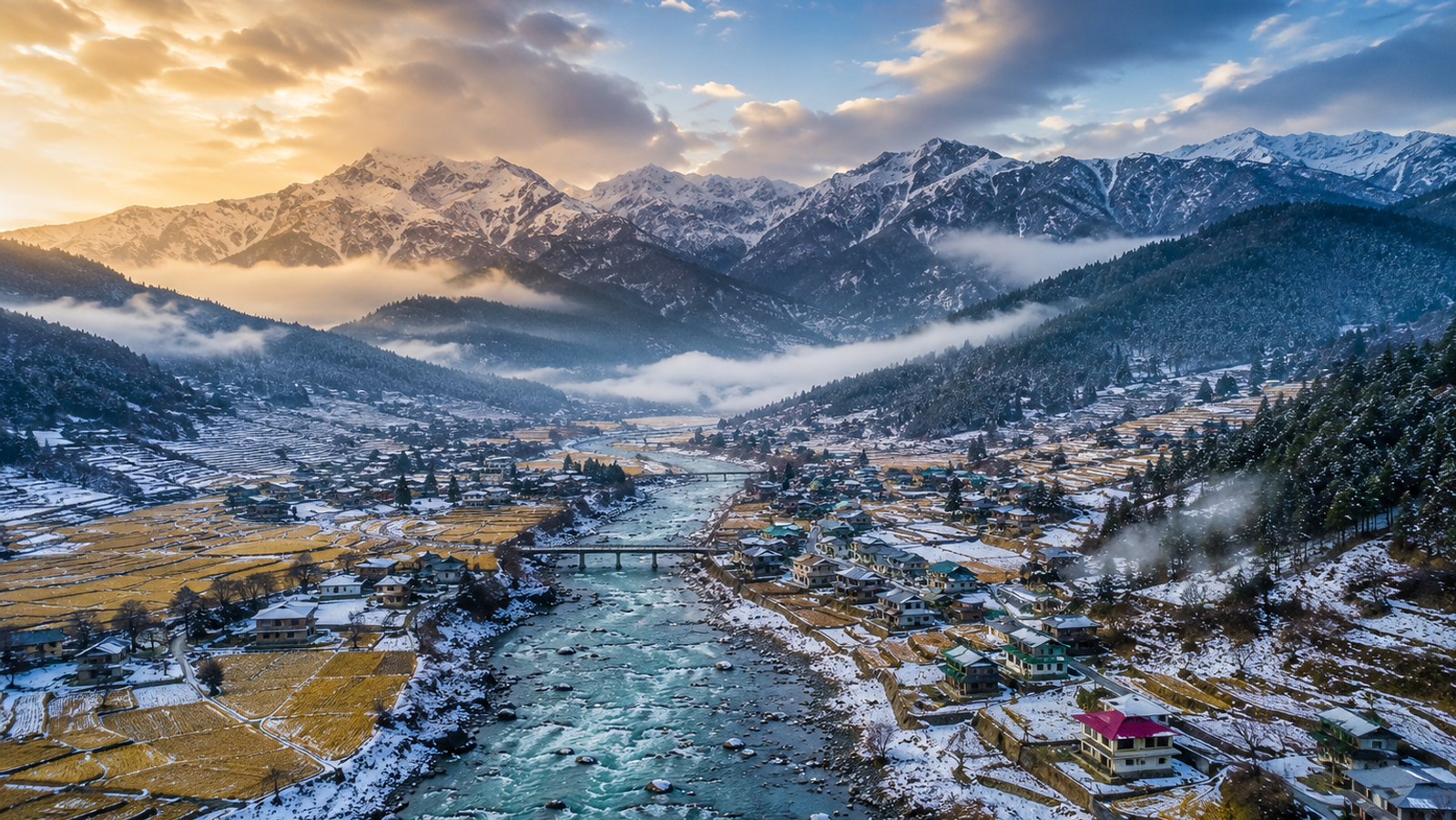
Quick Summary (Google Featured Snippet)
Dirang Valley in Arunachal Pradesh is home to legendary natural hot springs (Sulphur baths) known for their therapeutic and medicinal properties. Located near the banks of the Dirang River, these geothermal springs offer "Elemental Healing"—a blend of high-altitude wellness and mineral-rich hydrotherapy. For travelers in 2026, the best time to visit is from October to March, providing a perfect recovery stop on the way to Tawang.
1. The Science of Elemental Healing
In the high-altitude landscapes of the Eastern Himalayas, the earth breathes through its fissures. Elemental healing isn't just a poetic term; it refers to the high concentration of sulfur, magnesium, and calcium found in the Dirang hot springs.
These mineral baths are widely recognized for:
- Dermatological Benefits: Sulfur is a natural antibacterial agent that helps with skin rejuvenation.
- Muscle Recovery: The heat (typically between 38°C to 45°C) is ideal for trekkers returning from the best trekking trails in the region.
- Circulatory Boost: The thermal contrast between the cold Himalayan air and the hot water stimulates blood flow.
![Natural sulfur hot springs in Dirang Valley Arunachal Pradesh showing steam and stone architecture.]](https://cdn.sanity.io/images/khiai65a/production/34c9347947d282a4fed76270d1cac03ceb585e79-1536x1024.png?w=1200&h=800)
2. Top Hot Springs in Dirang Valley
While several small thermal vents exist, two primary locations offer the best experience for the modern traveler.
The Main Dirang Hot Spring
Located just a few kilometers from the main township, this is the most accessible spot. It features dedicated tanks where the water is channeled from the earth.
- Vibe: Local, authentic, and high-energy.
- Tip: Visit early in the morning (5:30 AM) to witness the sunrise hitting the valley while you soak.
The "Hidden" Riverside Vents
For those seeking a more "organic luxury" experience, several smaller vents along the riverbanks offer a more private soak.
- Vibe: Quiet, secluded, and connected to nature.
- BREEZIAH Insider Tip: We often include these stops in our 7-day Majestic Tawang Himalayan Escape to ensure our guests get a private moment of peace.
3. 2026 Wellness Trend: The Rise of 'Glow-cations'
As we move through 2026, travel has shifted from "seeing" to "being." The Glow-cation trend—travel focused on skin health and cellular rejuvenation—has made Dirang Valley a hotspot.
Unlike the crowded commercial spas of the city, Dirang offers a "zero-intervention" spa. The water isn't filtered or chemically treated; it is pure, elemental energy. This aligns perfectly with the current shift toward sustainable and minimalist travel found in our guide to things to do in Dirang.
4. Logistics: How to Reach & Best Time to Visit
Dirang sits at an altitude of approximately 4,900 feet, making it a comfortable acclimatization stop.
| Transport Mode | Route | Duration |
|---|---|---|
| By Road | Guwahati to Dirang | 8–9 Hours |
| By Road | Bomdila to Dirang | 1.5 Hours |
| Helicopter | Guwahati to Tawang (Drop at Dirang) | 1.5 Hours |
Best Time to Visit:
For the ultimate thermal experience, the Winter Season (November to February) is unparalleled. The bite of the mountain air makes the 40°C water feel like a literal lifesaver. If you are coming from a Meghalaya tour, the dry cold of Arunachal will be a refreshing change.
![Scenic winter landscape of Dirang Valley Arunachal Pradesh.]](https://cdn.sanity.io/images/khiai65a/production/813bcfc8d736f42713f79e279d3447392808e1c2-1536x1024.png?w=1200&h=800)
5. Packing Essentials for Himalayan Baths
Don't just pack a swimsuit. High-altitude bathing requires specific gear:
- Quick-Dry Microfiber Towel: Essential for the cold transition from water to air.
- Flip-Flops with Grip: The stones around the springs can be slippery and mossy.
- Hydration Pack: Hot springs dehydrate you quickly at high altitudes.
- Biodegradable Soap: If you must use soap, ensure it doesn't harm the local ecosystem.
For a full breakdown of what to carry for this region, check out our Arunachal Pradesh Packing Checklist.
6. Internal Circuit: Connecting Dirang to Tawang
Most travelers treat Dirang as a mere pitstop on the Guwahati to Tawang road trip. However, we recommend a 2-night stay in Dirang to fully benefit from the mineral baths.
After your healing soak, you will be better prepared for the high-altitude challenges of the Sela Pass and the steep climbs of Tawang.
[Image Placeholder: A traveler wrapped in a local Monpa shawl standing by the river, looking at the mountains. Alt-Text: Traveler experiencing Monpa culture and landscape in Dirang Arunachal Pradesh.]
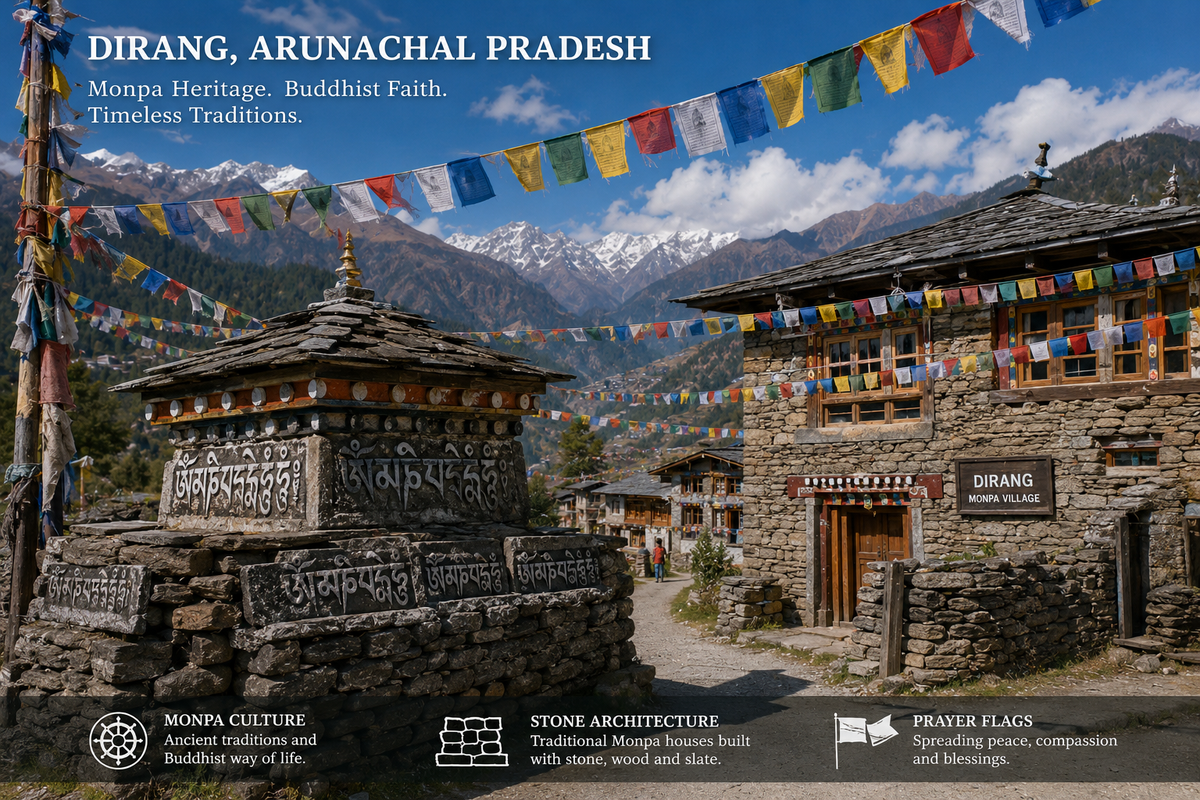
7. Cultural Etiquette: Respecting the Monpa Traditions
Dirang is the heartland of the Monpa people, and these springs are often considered sacred or community assets. To ensure your visit is respectful:
- Modesty is Key: While these are baths, they are in public or community-managed spaces. Most locals bathe in traditional wraps. If you are using public tanks, a modest swimsuit or a quick-dry t-shirt and shorts is recommended.
- The Gift of Silence: These areas are often used for meditation and quiet recovery. Avoid loud music or intrusive photography of locals.
- Offerings & Local Trade: You’ll find small stalls nearby selling local salt and medicinal herbs. Supporting these vendors is a great way to give back to the community that maintains the springs.
For a deeper understanding of the people you'll meet, read our Guide to Monpa Culture and Traditions.
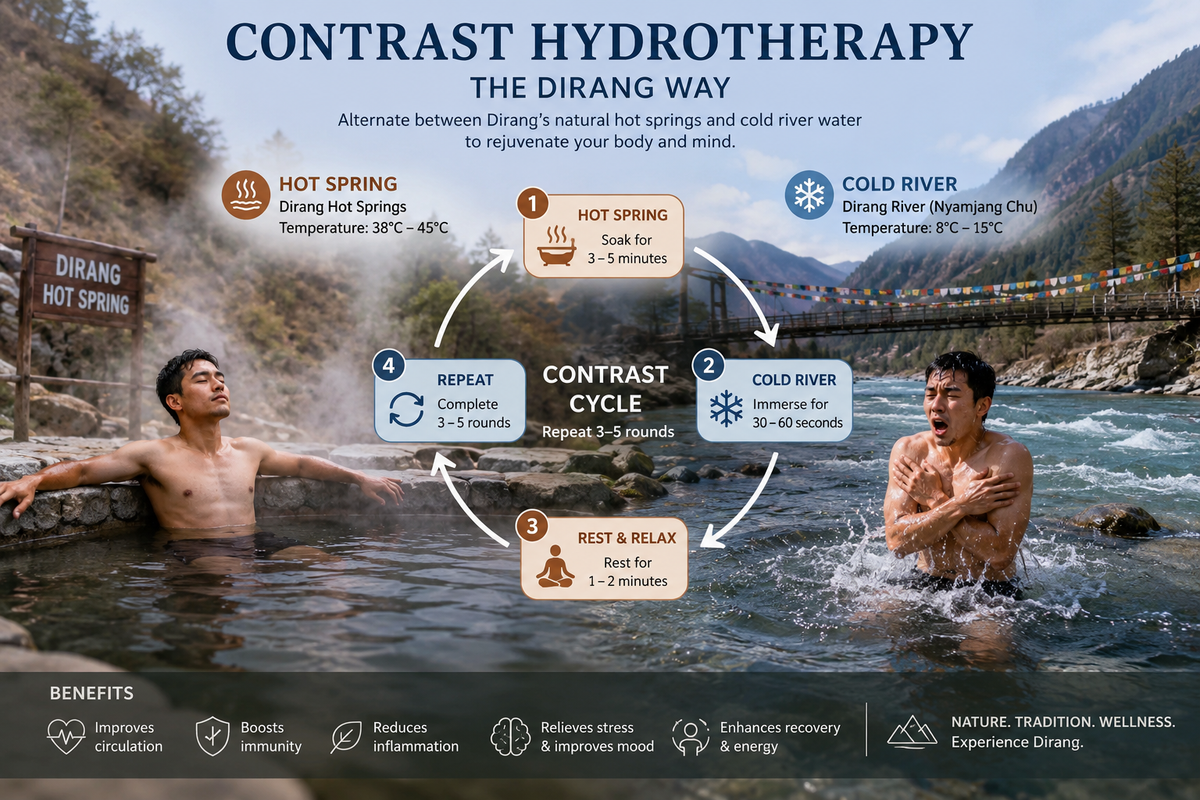
8. Hydrotherapy: The 'Contrast Soak' Technique
For the 2026 traveler looking for "Bio-hacking" benefits, the Dirang River provides a unique opportunity for Contrast Hydrotherapy.
- The Heat: Soak in the sulfur spring for 10–15 minutes until your core temperature rises and your muscles relax.
- The Cold: Carefully dip into the cold, glacier-fed waters of the Dirang River for 30–60 seconds.
- The Result: This process causes rapid vasoconstriction and vasodilation, which is incredible for reducing inflammation and resetting the nervous system.
Note: Always consult with a professional if you have heart conditions or blood pressure concerns.
9. Beyond the Springs: Synergistic Wellness Stops in Dirang
To maximize the "Elemental Healing" of your trip, don't stop at the water. Combine your baths with these nearby experiences:
- The Sangti Valley Meditation: A short drive away, the Sangti Valley offers a silent, high-altitude landscape perfect for post-soak reflection. It’s a top spot in our Hidden Gems of Arunachal guide.
- Foraged Himalayan Teas: Visit the local markets to find wild-grown herbs that, when brewed, complement the detoxifying effects of the sulfur baths.
- Altitude Acclimatization: Use your time in Dirang to rest before tackling the 13,700-foot Sela Pass.
10. Sustainable Bathing: The BREEZIAH Ethics
As a "Minimalist Luxury" agency, we advocate for Leave No Trace bathing. The hot springs are a delicate geothermal feature.
- Chemical-Free Zone: Avoid using heavy shampoos or synthetic soaps in the natural vents. The minerals in the water are enough to cleanse your skin.
- Plastic-Free: Carry a reusable bottle. The heat of the springs makes hydration vital, but the valley’s ecosystem cannot process plastic waste.
- Stay Local: Choose homestays that support the local Monpa families. We’ve curated a list of the Best Boutique Homestays in the region (applicable across our Northeast circuits).
11. FAQ: Everything You Need to Know
Helpful Answers
Frequently Asked Questions
A: Yes, the water is constantly flowing and self-replenishing from underground sources. However, it is a natural site, so expect stones and silt rather than tiled floors.
A: While accessible, the river levels can rise, and the springs may become diluted. For the best experience, refer to our best time to visit Arunachal guide.
A: There is usually a nominal maintenance fee (approx. ₹20–₹50) collected by local community members to keep the area clean.
A: Absolutely. Dirang is one of the safest regions in India. For more safety tips, see our post on Is Arunachal Pradesh Safe to Travel in 2026?.
Ready to experience the elemental healing of the Himalayas? At BREEZIAH, we specialize in curated, high-end journeys that go beyond the tourist trail. Whether you are looking for Arunachal Pradesh tour packages or a custom Plan My Trip consultation, we ensure your journey is as restorative as it is adventurous.
Plan This Journey
Turn this Arunachal Pradesh guide into a trip that fits your pace
If this guide is part of the kind of holiday you want, Breeziah can help shape the route, travel flow and stay style around your dates, comfort level and destination priorities.
Related Guides
Continue exploring Arunachal Pradesh
11 Best Things to Do in Arunachal Pradesh (2026 Complete Travel Guide)
Arunachal Pradesh is India's last great frontier — and these 11 experiences prove exactly why it needs to be on your 2026 travel list.
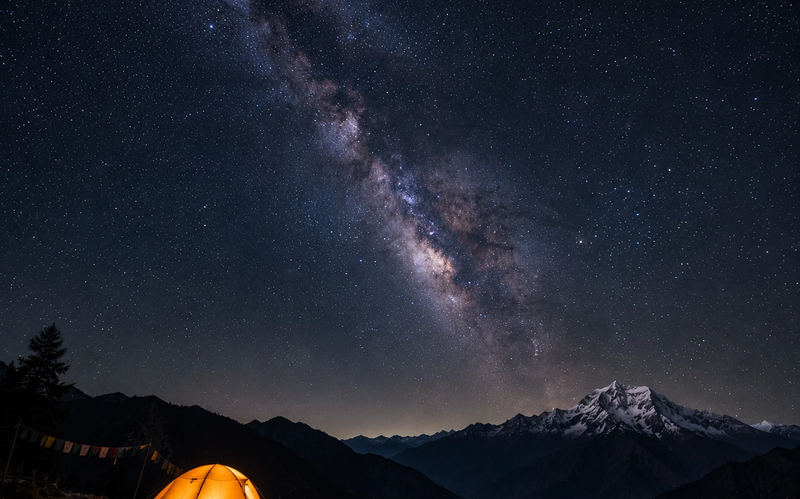
Beyond the Clouds: The Best Dark-Sky Stargazing Spots in Arunachal Pradesh for 2026
Escape the glow of the modern world and step into the infinite. Arunachal Pradesh, with its pristine high-altitude valleys and minimal light pollution, has become India’s premier frontier for stargazing. In 2026, we invite you to experience "Celestial Stillness"—a profound journey into the dark-sky sanctuaries of Mechuka, Ziro, and Anini. Whether you are an astrophotographer chasing the perfect Milky Way arch or a traveler seeking a meaningful connection with the cosmos at a local "Astrostay," this guide provides the solid foundations you need. Uncover tribal starlore, technical photography gear tips, and the best hidden spots to witness the universe in its most cinematic form.
Namdapha National Park: A Wildlife Lover’s Guide to Arunachal.
Namdapha isn't just a park; it's a lost world. Our 2026 guide covers the four big cats, the Noa-Dihing river crossings, and why this is the most biodiverse spot in India for wildlife lovers.