8 Things to Do in Dawki: A Complete Guide
Published
Reading time
7 min read
Most people give Dawki half a day. Here's why that's a mistake.
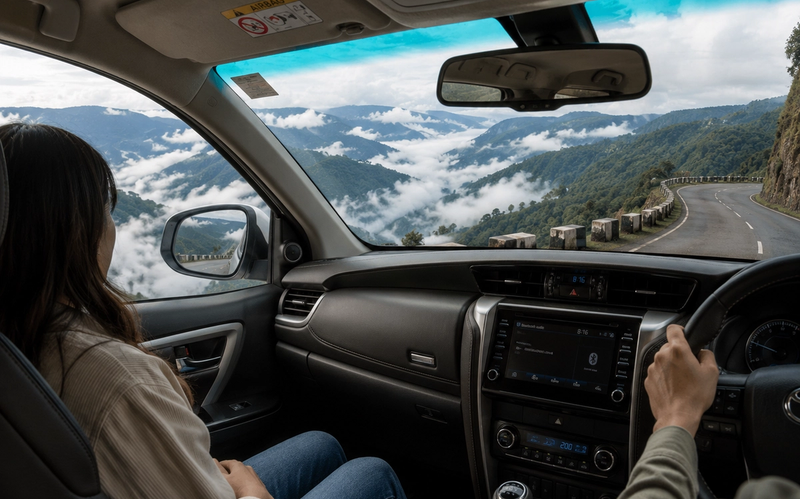
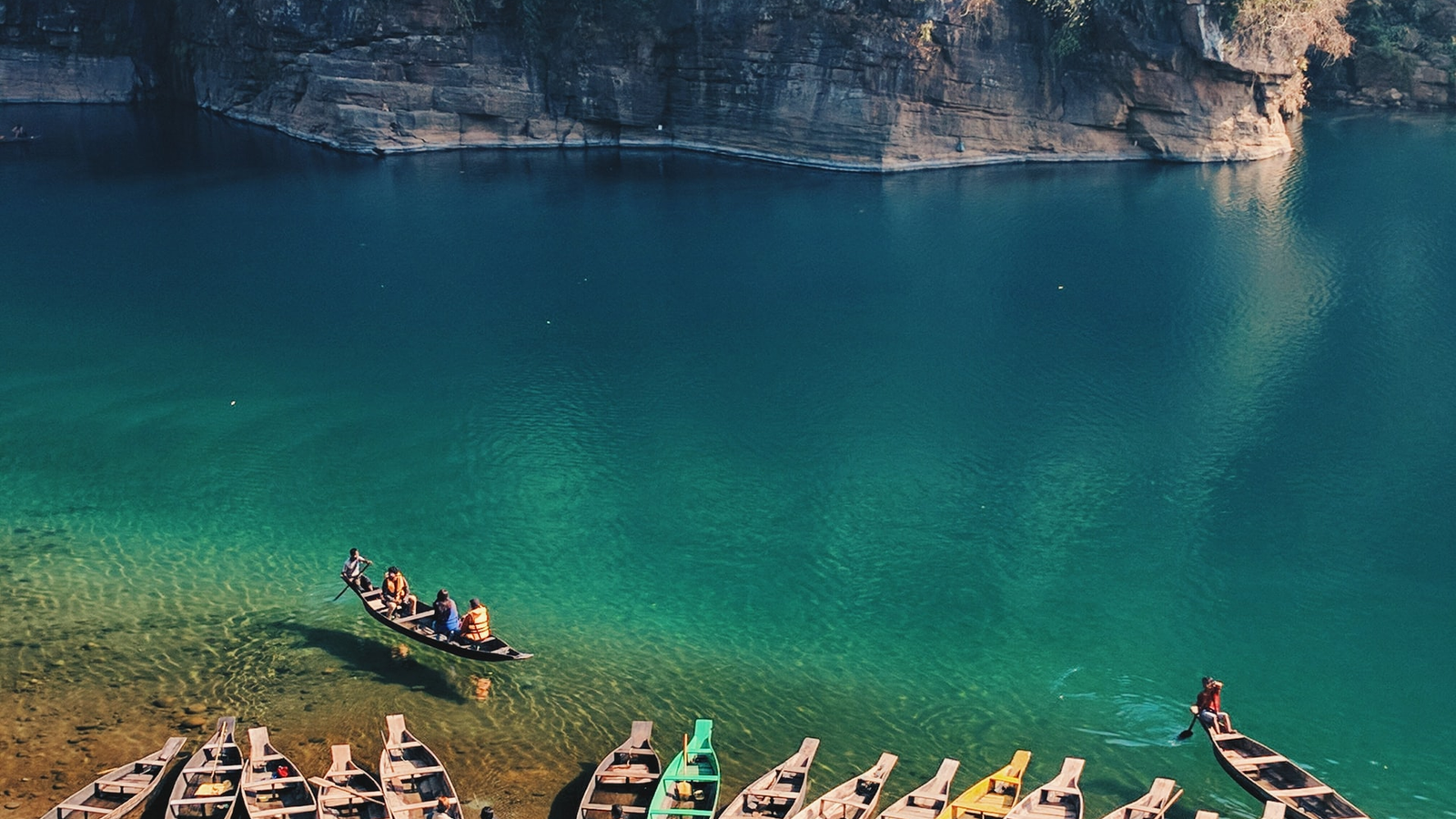
Dawki doesn't announce itself. It's a small border town in Meghalaya's West Jaiñtia Hills — easy to miss, easy to rush through. But then you get on the Umngot River, and everything slows down. The water is so clear that the boat looks like it's floating on air. The riverbed is visible from the surface. The hills frame everything in green. And suddenly, half a day doesn't feel anywhere near enough.
That's the thing about Dawki. The people who treat it as a quick stopover leave with one photo. The ones who stay leave with a completely different relationship with Northeast India. This guide is for the second kind of traveller.
1. Boat Ride on the Umngot River
This is why Dawki is on every travel list — and it earns its place. The Umngot is one of the clearest rivers in India. Boats appear to float mid-air above the riverbed, every pebble and current visible from the surface. On a clear morning with mist still sitting on the hills, it's one of the most quietly beautiful things you'll see in the Northeast.
Tips:
- Boats available at the main ghat, around ₹800
- Go early morning for calm water and better light
- November to February gives the clearest water of the year
- Spend at least an hour on the water — don't rush back to shore
2. Walk the Dawki Suspension Bridge
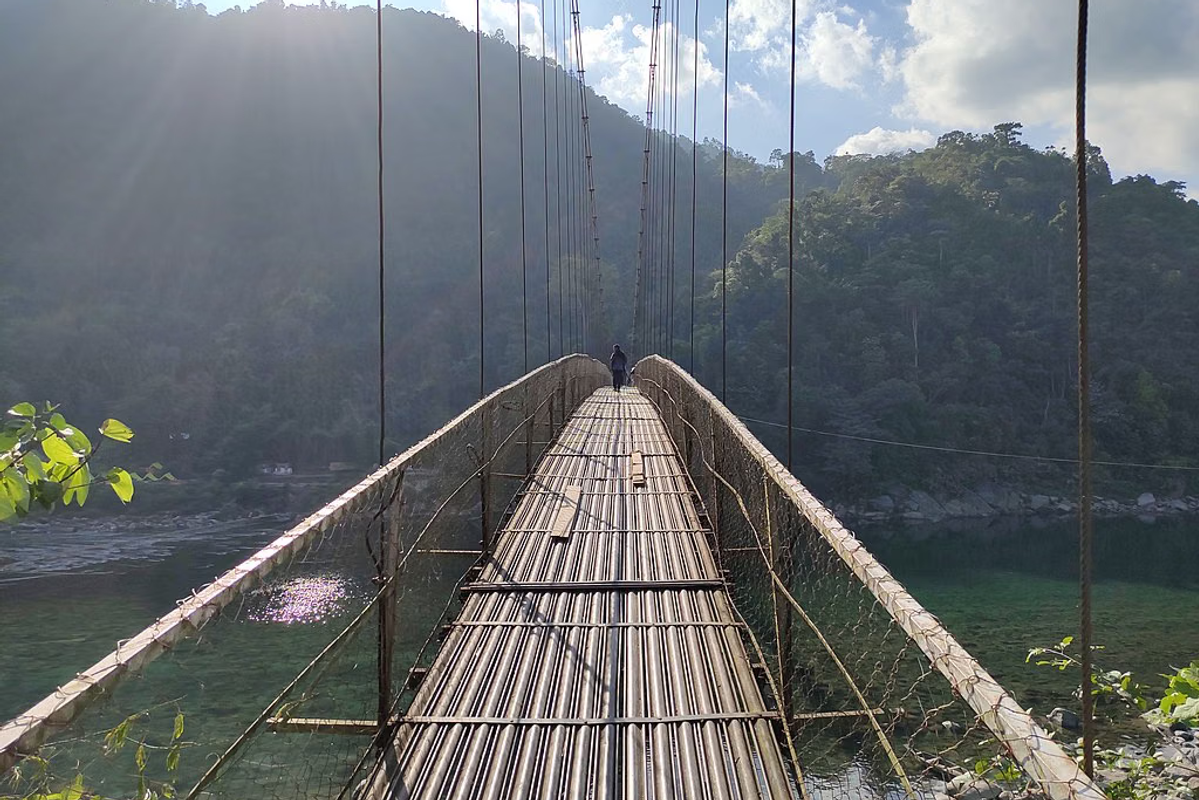
Built by the British in 1932, the Dawki Suspension Bridge stretches over the Umngot and gives you something the boat can't — a top-down view of the river. Looking straight down into the turquoise water from above is what makes you fully understand just how clear it really is. From the boat, you experience the river. From the bridge, you see it.
Tips:
- Free entry, takes about 30 minutes
- Best in the early morning before crowds arrive
- Great photography spot — especially for the top-down river shot
3. Visit the Indo-Bangladesh Friendship Gate
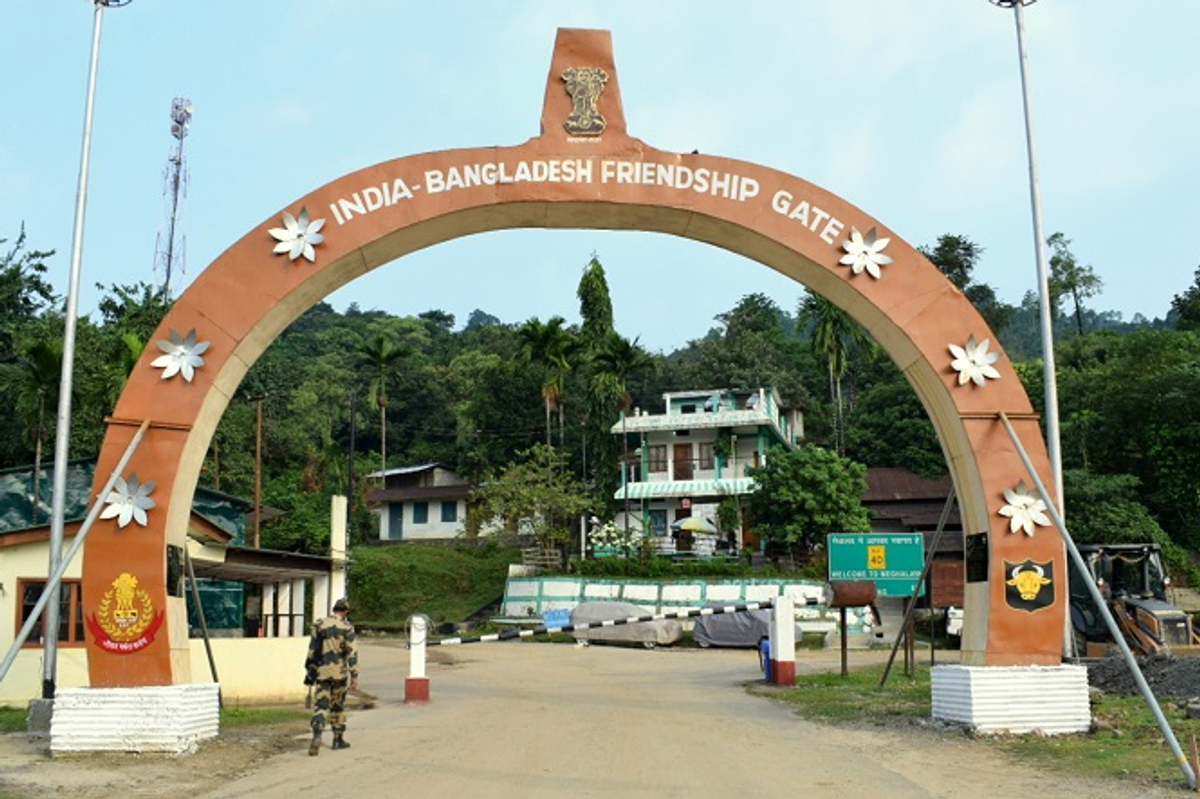
Most visitors don't realise you can walk right up to the Tamabil Border crossing without any permit. Standing at the exact line where India and Bangladesh meet is a strangely moving experience — watching goods cross, looking out over the Bangladesh plains from the Meghalayan hills. It doesn't feel like a wall. It feels like a seam between two very different worlds touching at one point.
Tips:
- Open daily, 9 AM to 5 PM — no entry fee, no permit for Indian nationals
- Foreign nationals should check ILP/PAP requirements beforehand
- Combine with the Bangladesh View Point nearby — both take under an hour together
4. Stand at the Bangladesh View Point
A short drive from the border gate, this viewpoint sits right at the edge of the Meghalayan hills and looks out over the Bangladesh plains stretching endlessly below. What makes it genuinely remarkable is the geography — you're standing on ancient limestone hills that drop suddenly into flat green wetlands that go all the way to the horizon. Two countries, one unbroken view, sharing the same sky.
It doesn't show up on most maps and has no formal entry point. Ask a local near the border gate, and they'll point you right to it.
Tips:
- Free, no signage — ask a local for directions
- Best in the late afternoon when the plains glow golden
- Combine with the border gate visit — they're minutes apart
- Don't skip it thinking it's not worth the detour. It is
5. Adventure Activities at Shnongpdeng
Just 8 km from Dawki, Shnongpdeng is where the adventure crowd goes. Same river, same clarity — but here you're allowed to get into the water. Kayaking, snorkelling, cliff jumping, ziplining 300 feet above the river, and scuba diving are all available from operators on the bank. Snorkelling in water this transparent is unlike anything you'd experience in murky seawater. Even if adventure isn't your thing, the walk along the Shnongpdeng riverbank alone is worth the drive.
Tips:
- Walk the full riverbank and compare operators before booking
- Arrive early — afternoons get crowded, especially on weekends
- Kayaking and snorkelling are the best starting points for first-timers
- Most packages are reasonably priced — always negotiate
6. Eat Authentic Khasi Food at a Riverside Stall
The small wooden-front stalls near the Dawki ghat — run almost entirely by Khasi women — are where the real food is. No printed menus. You ask what's been cooked, and you eat what comes out.

Jadoh is the one dish you cannot leave without trying — rice slow-cooked in pork fat with ginger, turmeric, and green chillies, served on a steel plate by someone who made it that morning. Dohneiiong is pork in a smoky black sesame gravy, deeply filling after a day on the water. Tungtap is a fermented fish chutney that divides people on first smell but converts almost everyone on first bite. And the fresh river fish from the Umngot, grilled simply with no frills, is the sleeper hit of the entire trip.
Tips:
- Eat at ghat-side stalls, not resort restaurants or highway dhabas
- Go between 12 PM and 2 PM when stalls are freshest
- Just ask what's available and say yes — you won't regret it
- Carry cash; most stalls don't take UPI or cards
7. Camp Overnight at Shnongpdeng
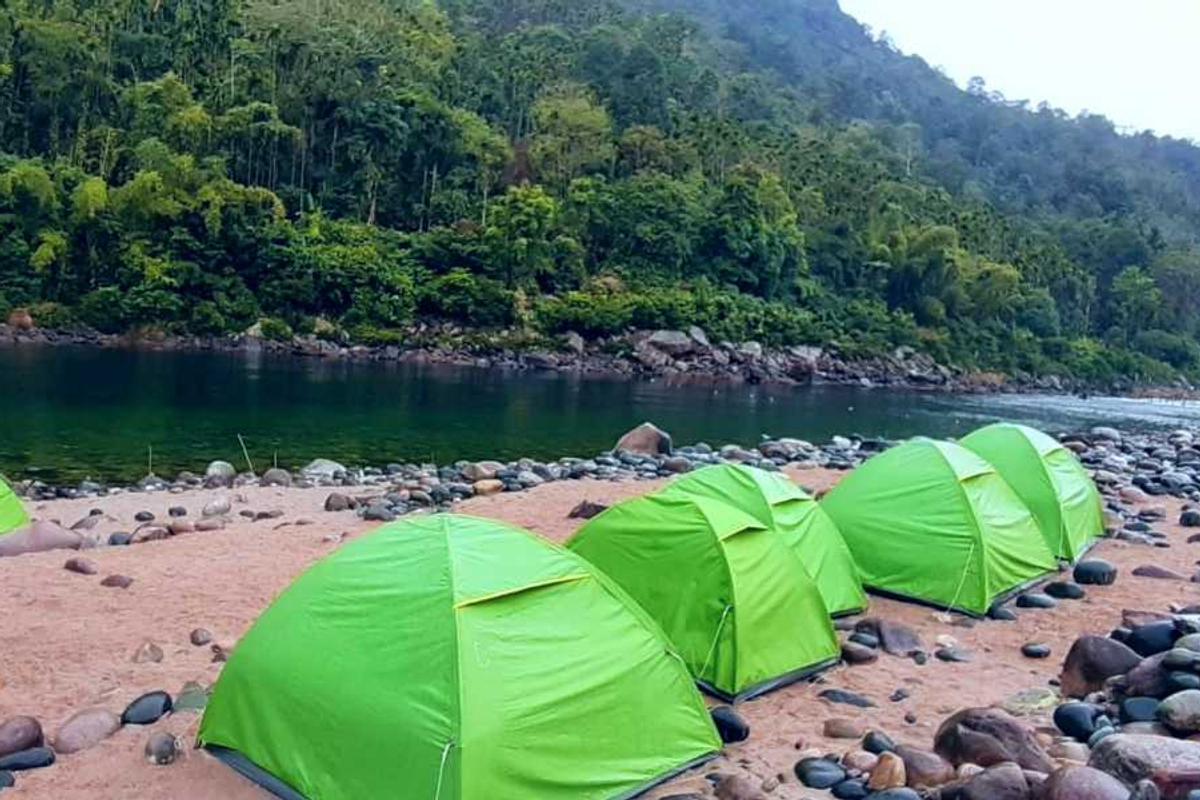
This is the one upgrade that completely changes the Dawki experience. By day, Shnongpdeng is alive with kayaks, ziplines, and activity operators. After dark, the river goes quiet, the hills go dark, and you can see Bangladesh's lights glimmering faintly across the water. Waking up to mist on the Umngot before anyone else is awake is the version of Dawki you'll remember years from now.
Tips:
- Book camping packages directly at the riverbank or through Shillong accommodation
- Packages include tents, meals, and drop services — typically ₹1,500 to ₹2,500 per person
- Carry a light jacket — riverside nights get cold even in winter
- One night is enough; two if you want to fully decompress
8. Trek to Byrdaw Falls
Nine kilometres from Dawki on the Dawki–Riwai road, Byrdaw Falls is the most underrated stop in the region. It asks a little more of you — 650 steps and a half-kilometre trek through dense subtropical forest — but that's exactly why it's good. The falls drop over rugged cliffs into a clear emerald pool, surrounded by forest that's thick, cool, and completely quiet. A local boy at the trailhead will offer to guide you down for free. Go with him.
Tips:
- Water flow is strongest from July through October — post-monsoon is the best time
- Worth visiting in winter too, just for the forest walk
- A small tip for the local guide is expected and well-deserved
- Visit in the afternoon when the light filters through the canopy best
Planning a Meghalaya trip? Save this and share it with anyone who thinks Dawki is just a day trip.
Plan This Journey
Turn this Dawki guide into a trip that fits your pace
If this guide is part of the kind of holiday you want, Breeziah can help shape the route, travel flow and stay style around your dates, comfort level and destination priorities.
Related Guides