A Guide to Sikkim's Most Beautiful Monasteries: Rumtek, Pemayangtse & More
Published
Reading time
5 min read
Quick Summary: The Spiritual Heart of Sikkim
- The Essentials: Sikkim houses over 200 monasteries, primarily belonging to the Nyingma and Kagyu sects of Tibetan Buddhism.
- Must-Visit Icons: Rumtek Monastery (seat of the Karmapa in exile), Pemayangtse (the premier royal monastery), and Tashiding (the most sacred hill).
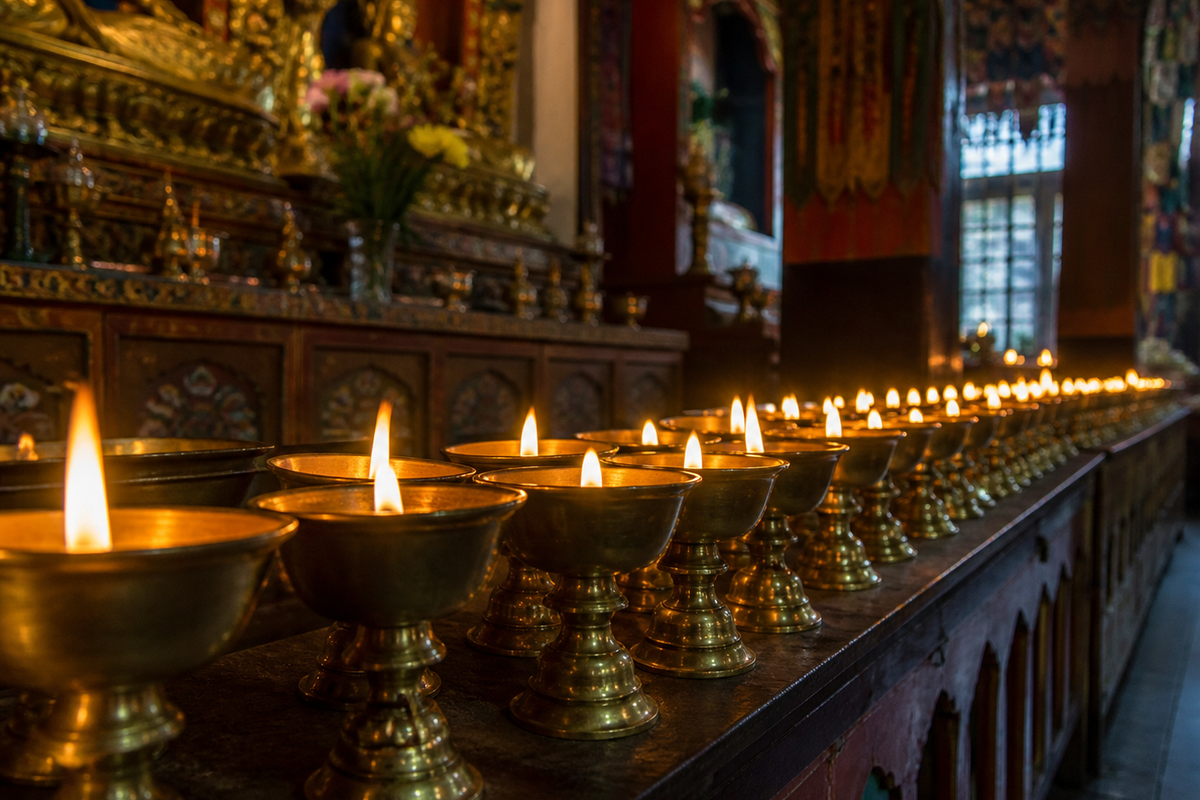
- 2026 Trend: "Spiritual Slow-Zone Travel"—Instead of rapid temple-hopping, modern travelers are opting for day-long meditative sits, morning prayer participations, and learning traditional butter-lamp lighting.
- Etiquette Basics: Always walk clockwise (Kora) around monasteries and stupas, remove shoes before entering the main shrine hall, and strictly request permission before taking photographs of the monks or altar.
1. The Spiritual Landscape: Buddhism in Sikkim
Sikkim's sacred landscape is anchored in ancient Tibetan Buddhism, particularly the Nyingma (the "Ancient") and Kagyu (the "Oral Lineage") orders. When the patron saint Guru Padmasambhava (commonly known as Guru Rinpoche) consecrated Sikkim as a Beyul (a hidden sacred valley of peace) in the 8th century, he laid the spiritual foundations for the region.
Today, these institutions are not merely tourist attractions; they are living universities, architectural landmarks of wooden beams and gold leaf, and sanctuaries of Cinematic Stillness. For the refined explorer, a journey through these holy structures is a transition from the chaotic noise of modern life into deep, mindful stillness.
2. Rumtek Monastery: The Seat of the Black Hat Sect
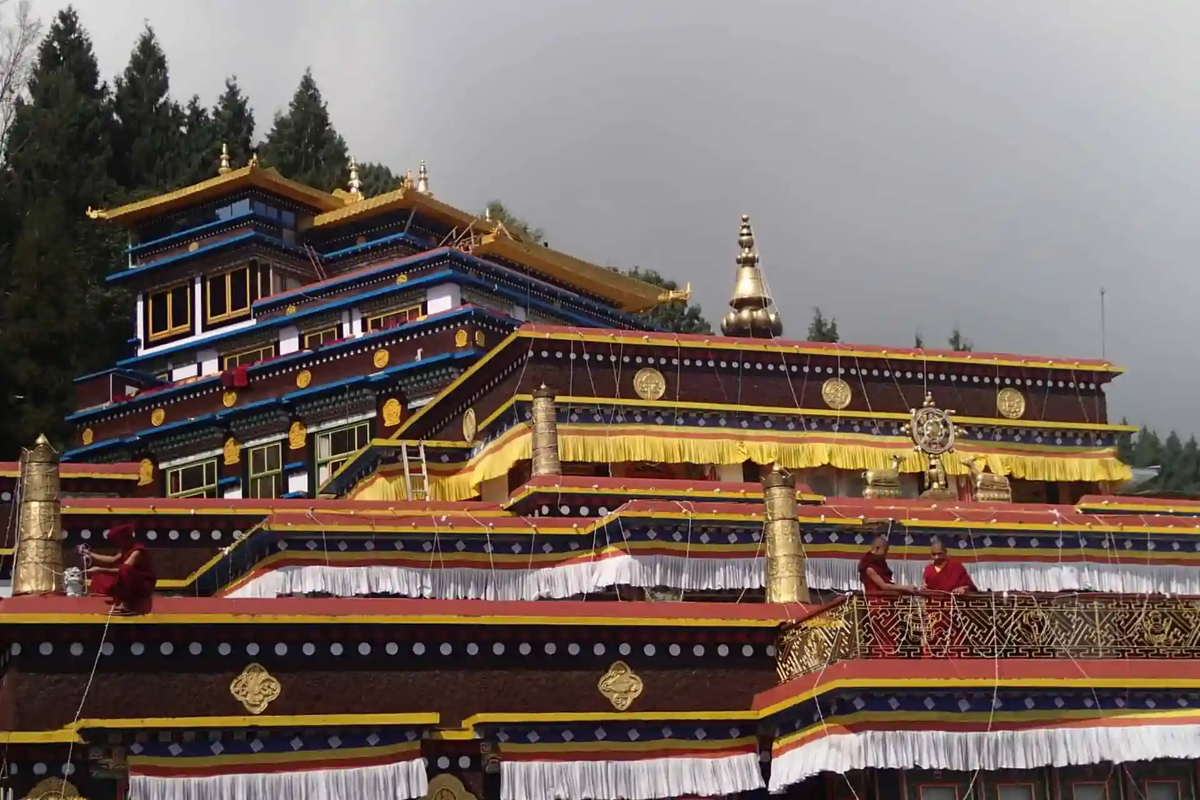
Located approximately 24 kilometers from the capital, Rumtek Monastery is the largest and most politically significant monastery in Sikkim. Built to replicate the historic Tsurphu Monastery in Tibet, it serves as the main seat of the Karma Kagyu lineage in exile.
The Architecture and the Golden Stupa
The main temple is a brilliant four-story structure displaying traditional Tibetan design, featuring vibrant murals, columns decorated with hand-painted gold leaf, and a central courtyard where young monks debate.
- The Crown Jewel: Behind the main temple lies the Karma Shri Nalanda Institute of Higher Buddhist Studies, as well as the Golden Stupa, which contains the relics of the sixteenth Gyalwa Karmapa.
- The Experience: Listen to the resonant mid-afternoon chanting of the monks accompanied by long horns (dungchen) and drums.
- Internal Link: Plan your stay in the capital using our comprehensive guide to things to do in Gangtok to comfortably coordinate a day trip to Rumtek.
3. Pemayangtse Monastery: The Royal Legacy of West Sikkim
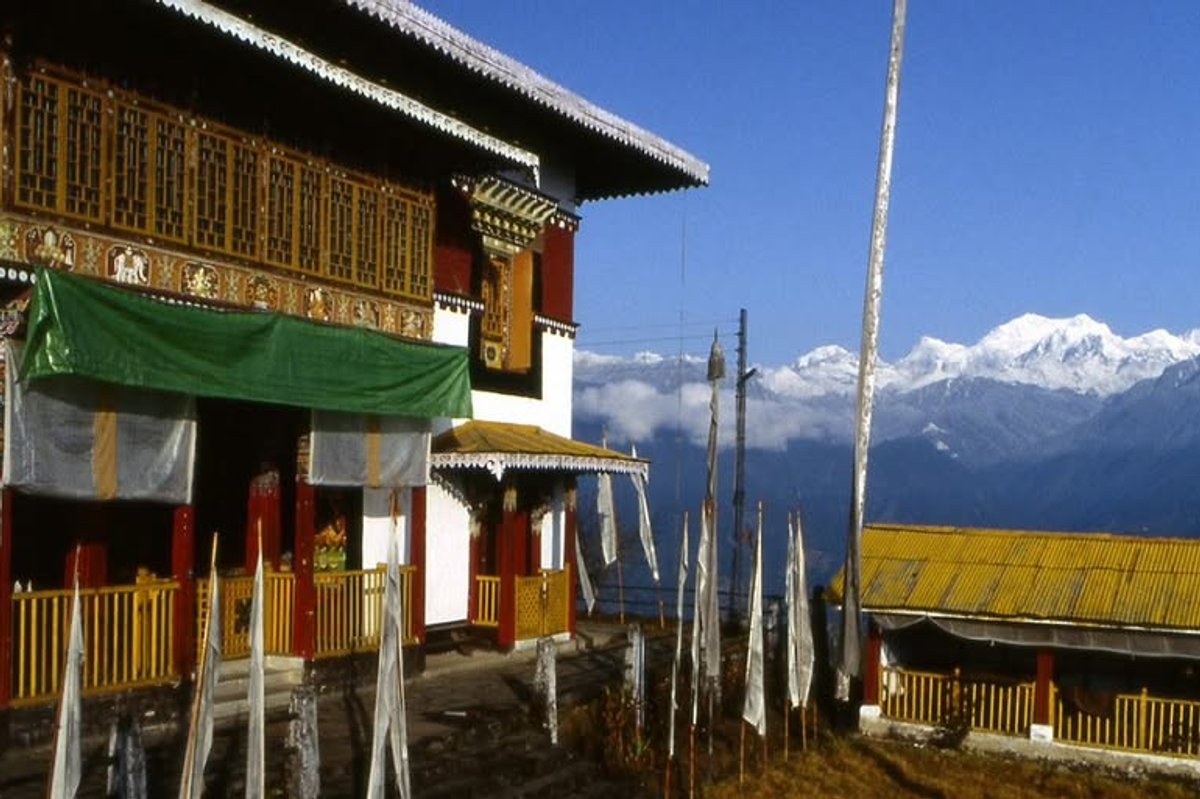
Perched at an elevation of 6,840 feet in West Sikkim, Pemayangtse translates literally to "Perfect Sublime Lotus." Founded in 1705 by Lhatsun Chempo, it is one of the oldest and most prestigious premier monasteries in the state. Historically, only the Ta-Sang (pure monks of Tibetan descent) were admitted here, and they held the exclusive right to anoint the Chogyals (kings) of Sikkim.
The Sangtok Palri (Heavenly Palace)
Inside the main shrine, the primary attraction is a masterpiece of Sikkimese woodworking: the Sangtok Palri.
- What it is: A seven-tiered wooden model depicting the celestial palace of Guru Rinpoche, painstakingly hand-carved by a single monk, Dungzin Rimpoche, over a span of five years.
- The Landscape: Pemayangtse offers panoramic views of the Kanchenjunga range, acting as a stunning visual bridge between nature and spirituality.
- Internal Link: Combine your spiritual exploration of Pemayangtse with other panoramic vistas by reviewing the best things to do in Pelling.
4. Tashiding Monastery: The Cleanser of Sins
If Pemayangtse is the royal head, Tashiding Monastery is the spiritual heart of Sikkim. Built in 1641 on a conical hilltop situated between the Rathong and Rangit rivers, local folklore dictates that even a simple glance at this monastery can cleanse a soul of all earthly sins (known as Tong-Wa-Rang-Dol).
The Bhumchu Festival and Holy Water
Tashiding is famous for its sacred Bhumchu Festival (typically held in February or March), where a sacred pot of holy water is opened by senior lamas. The level and quality of the water are studied to predict the peace, agricultural harvest, and prosperity of Sikkim for the coming year.
- The Atmosphere: Surrounded by countless white prayer flags flapping in the wind, Tashiding represents the ultimate destination for those chasing authentic "Organic Intimacy" with Himalayan spirituality.
- Internal Link: Make sure you are traveling during the right season for spiritual festivals by reviewing our guide on the best time to visit Sikkim.
5. Enchey Monastery: The Solitary Anchor of Gangtok
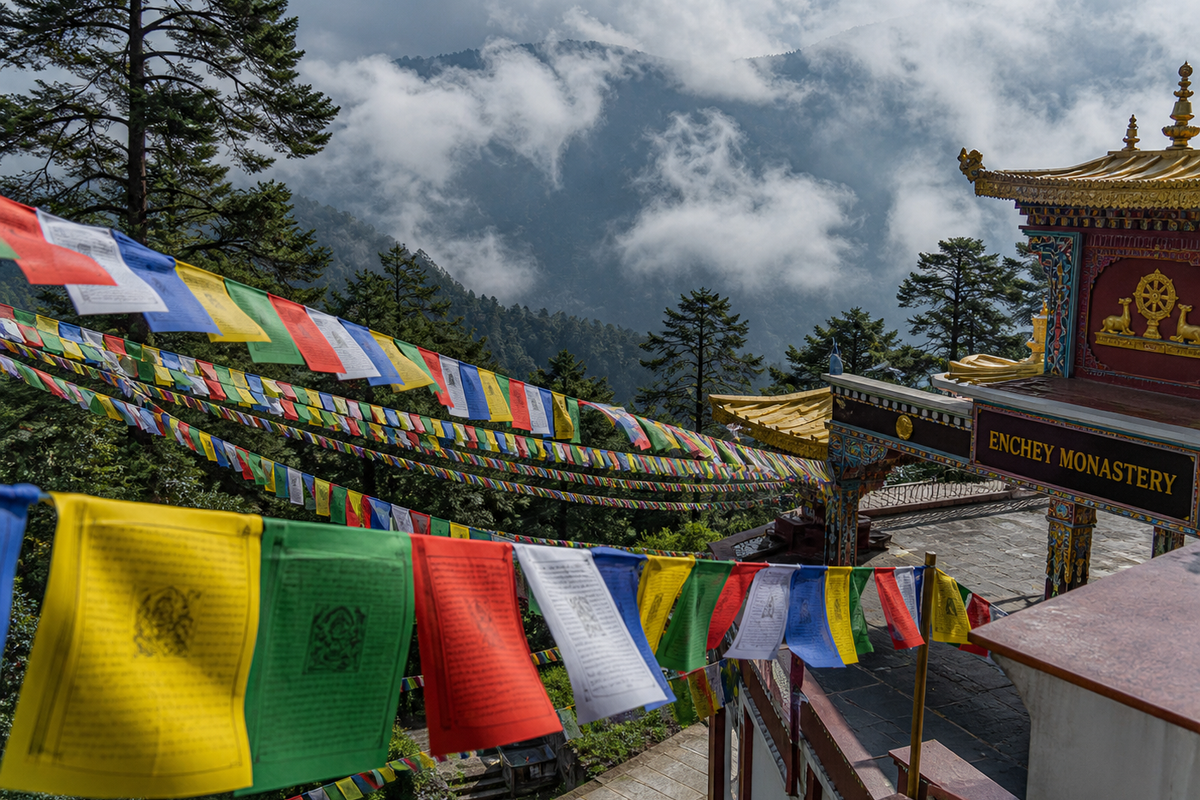
Meaning the "Solitary Temple," Enchey Monastery is built on a high ridge overlooking Gangtok. Legend has it that the great tantric master Lama Drupthob Karpo flew to this spot and built a small hermitage here.
The Guardian Presence
The monastery belongs to the Nyingma order and is designed to mimic the architectural profile of the sacred Chinese mountain, Mount Wutai.
- The Cham Dances: Enchey hosts the vibrant annual Cham (masked ritual dances) performed by monks, symbolizing the triumph of good over evil.
- Local Tip: It is easily accessible from the town center, making it a perfect morning walk destination for those staying in Gangtok.
- Internal Link: After a peaceful morning at Enchey, explore the local gastronomy by finding the best food in Gangtok.
6. Phodong & Ralang: Off the Beaten Track
For travelers wishing to bypass the common tourist trail, North and South Sikkim host legendary sanctuaries of deep quiet.
Phodong Monastery (North Sikkim)
Located 28 kilometers north of Gangtok, Phodong is one of the three main monasteries of the Kagyu sect. It contains ancient, beautifully preserved murals that depict the lineage of the Kagyu masters.
- Internal Link: Read our North vs. South Sikkim comparison guide to understand the differences in accessibility, road conditions, and scenic rewards between these sectors.
Ralang Monastery (South Sikkim)
Situated near Ravangla, the new Ralang Monastery (built in 1995 to house the growing community of monks) stands as a monumental temple complex displaying exquisite modern Tibetan architecture. Its sister site, the Old Ralang Monastery, sits a few kilometers away and is a rustic, wood-and-stone temple from the 18th century.
- Internal Link: Enhance your South Sikkim itinerary by mapping out the top things to do in Ravangla.
7. The 2026 Slow-Travel Experience: Spiritual Etiquette
A visit to these spiritual sanctuaries should be approached with deep reverence. BREEZIAH champions mindful travel that supports and respects local traditions.
Important Cultural Etiquette Checklist:
- Dress Modestly: Ensure shoulders and knees are fully covered. Avoid hats and sunglasses inside the prayer halls.
- The Direction of the Kora: Always walk around the temple structures, mani walls, and stupas in a clockwise direction.
- Silent Observation: Turn off mobile phones and maintain quiet inside the prayer halls, especially if monks are chanting or meditating.
- Photography Rules: Strictly avoid taking photos inside the main temple chambers or of the deities unless explicitly given permission by a senior lama.
8. Logistics: Mapping Your Monastic Route
Sikkim’s mountainous terrain means navigating travel distances requires a careful plan.
- Siloing Your Trip: To avoid fatigue, group your monastery visits geographically. Visit Rumtek and Enchey while based in Gangtok; visit Pemayangtse and Tashiding while staying in Pelling or Ravangla.
- Permit Check: Certain high-altitude monasteries in North Sikkim near the border require specific travel permits.
- Internal Link: Ensure your transit from other hubs like Kolkata or Delhi is seamlessly structured by checking our logistics guide on how to reach Sikkim.
- Internal Link: Keep track of essential cold-weather items needed for mountain-top monasteries by using our ultimate Sikkim packing list for 2026.
Sikkim Monasteries Comparison Matrix
To help you choose which of these incredible landmarks to include in your personalized BREEZIAH itinerary, review this quick comparison table:
| Monastery | Location | Sect | Key Highlight | Best Time to Visit |
|---|---|---|---|---|
| Rumtek | East Sikkim (Gangtok) | Karma Kagyu | Seat of the Karmapa; Golden Stupa | March to May, October to December |
| Pemayangtse | West Sikkim (Pelling) | Nyingma | Hand-carved 7-tiered wooden Sangtok Palri | March to June (Rhodeodendrons) |
| Tashiding | West Sikkim (Tashiding) | Nyingma | Sacred Bhumchu holy water festival | February/March |
| Enchey | East Sikkim (Gangtok) | Nyingma | Solitary ridge location; Cham dances | September to November |
| Phodong | North Sikkim | Kagyu | Ancient murals; tranquil surroundings | October to December |
9. Frequently Asked Questions (FAQ)
Helpful Answers
Frequently Asked Questions
A: Foreign tourists are allowed to visit major monasteries like Rumtek, Enchey, Pemayangtse, and Tashiding. However, they must obtain a Restricted Area Permit (RAP), which is easily issued at border checkposts like Rangpo or through BREEZIAH.
A: Most monasteries do not have a formal entry fee, though some larger sites like Rumtek may charge a nominal maintenance ticket (usually ₹10 to ₹20). Donations are always welcome and help support the monastic schools.
A: Yes. Many young monks speak English or Hindi and are happy to converse politely about their daily routines, studies, and local Buddhist history, provided they are not in active prayer sessions.
A: Sites like Enchey, Phodong, and Rumtek have relatively flat approach roads. However, Tashiding requires a moderate uphill walk from the parking area, which may be challenging for travelers with respiratory or knee concerns.
Ready to find your path of Cinematic Stillness? At BREEZIAH, we construct travel experiences built on solid foundations of local heritage, safety, and cultural immersion. Let us design an authentic, private pilgrimage route that lets you experience the quiet soul of the Himalayas.
Plan My Journey with BREEZIAH | Explore Our Curated Tour Packages | Contact Our Team
Plan This Journey
Turn this Sikkim guide into a trip that fits your pace
If this guide is part of the kind of holiday you want, Breeziah can help shape the route, travel flow and stay style around your dates, comfort level and destination priorities.
Related Guides
Continue exploring Sikkim
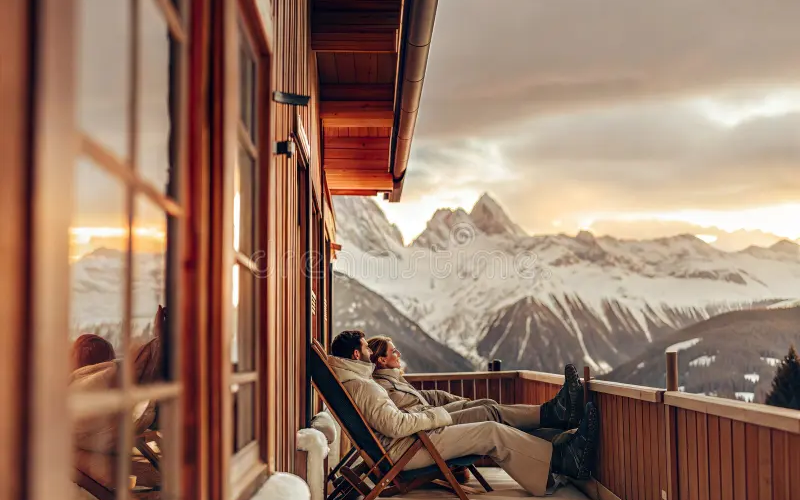
Sikkim for Couples: Best Romantic Getaways and Honeymoon Resorts
Escape to a land of "Organic Intimacy" where the clouds touch the peaks and time slows down for two. From the gilded sunrise at Buddha Park to the private tea-tasting sessions in Temi, Sikkim is the ultimate canvas for a romantic story. Whether you’re seeking the solid foundation of a heritage resort in Gangtok or the cinematic stillness of a stargazing night in Nathang Valley, our 2026 guide reveals the most meaningful products of Himalayan romance. Discover why Sikkim is India’s premier destination for couples seeking connection beyond the ordinary.
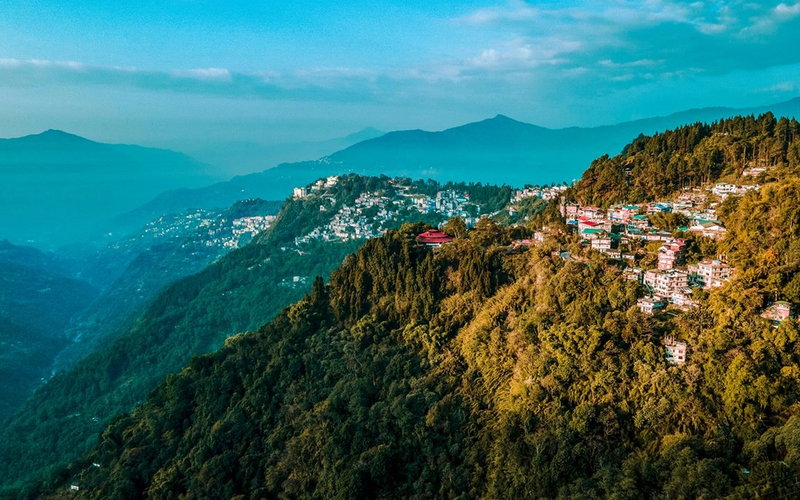
Sikkim on a Budget: How to Explore the Himalayas for Less
Think the Himalayas are only for big spenders? Think again. From mastering the intricate shared cab network of Gangtok to finding the "Refined Luxury" of a ₹800 heritage homestay, we’re pulling back the curtain on how to explore Sikkim without breaking the bank. Discover the 2026 "Slow-Zone" strategy, learn to DIY your own border permits, and find out why South Sikkim is the secret haven for the frugal explorer. Your mountain story doesn't need a five-star budget—it just needs a solid foundation.
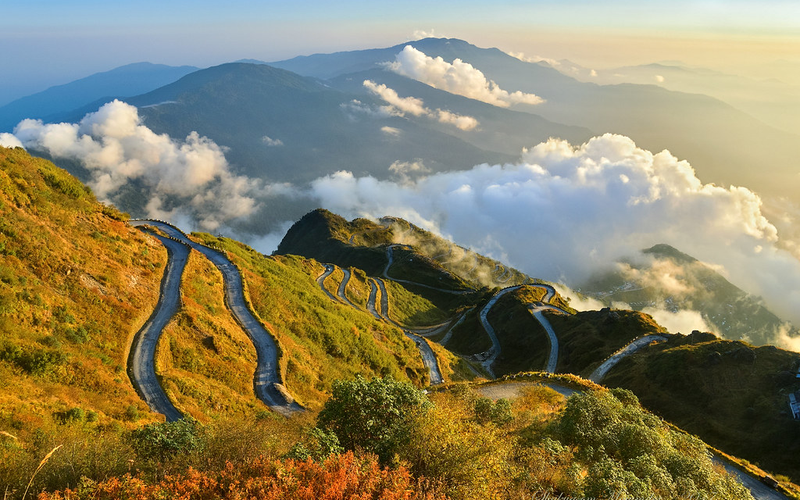
Exploring the Old Silk Route in Sikkim: A Historic Journey
Step back in time to an era of caravans and mountain passes. The Old Silk Route in East Sikkim isn't just a road; it’s a living museum of human endurance and spiritual stillness. From the dizzying 32 loops of Zuluk to the "Frozen Mirror" of Kupup Lake, discover how to navigate this high-altitude frontier. Whether you're chasing the golden light at Thambi or the Tibetan roots of Nathang, our 2026 guide provides the solid foundations for a truly meaningful historic expedition.